

Capsule House Manufacturer: Complete Guide to Modern Prefabricated Living Solutions

Introduction
The global prefabricated housing market continues to expand rapidly, driven by increasing demand for sustainable, cost-effective, and rapidly deployable living solutions. As a leading capsule house manufacturer, Guangdong Yaoda Housing Technology Co., Ltd. specializes in designing and producing innovative capsule houses, space capsule units, and modular structures for diverse applications. With advanced manufacturing capabilities and ISO-certified production processes, the company has established itself as a trusted partner for developers, resort operators, and individuals seeking modern housing alternatives.
According to Grand View Research, the global modular construction market size was valued at $157.2 billion in 2023 and is projected to reach $271.6 billion by 2030, growing at a CAGR of 8.2%. This growth trajectory underscores the critical role that specialized capsule house manufacturers play in meeting evolving market demands for efficient, sustainable, and aesthetically appealing living spaces.
Understanding Capsule House Technology
Design Philosophy and Architecture
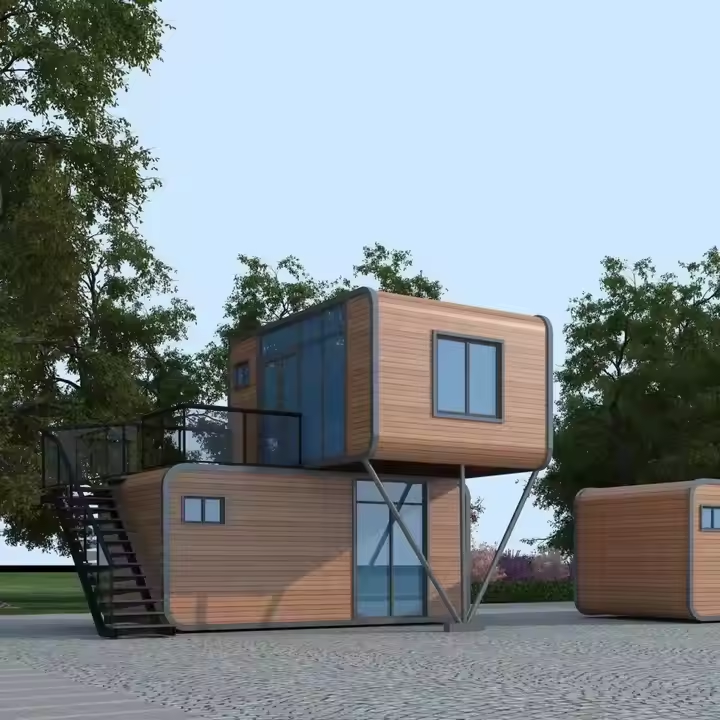
Capsule houses represent a revolutionary approach to compact living, combining minimalist design principles with advanced engineering. These structures typically range from 15-50 square meters, optimizing every cubic meter of space for functionality and comfort.
Core Design Elements:
- Modular construction enabling rapid assembly (2-7 days)
- Lightweight yet durable materials (steel frame, aluminum cladding)
- Integrated smart home systems for energy efficiency
- Panoramic glazing for natural light and visual connection
- Sustainable materials with 80-95% recyclability rate
Manufacturing Process and Quality Standards
Professional capsule house manufacturing involves sophisticated production processes:
Production Capabilities:
- CNC precision cutting: ±0.5mm tolerance
- Automated welding systems: 98% weld quality rate
- Powder coating lines: 50-80μm coating thickness
- Assembly line capacity: 200-500 units per month
- Quality inspection: 100% units tested before delivery
Quality Certifications:
- ISO 9001:2015 quality management
- ISO 14001:2018 environmental management
- CE certification for European markets
- ASTM E119 fire resistance testing
- Wind load resistance: 120 km/h standard
Product Categories and Applications
Space Capsule Houses
Space capsule houses represent the pinnacle of modern compact living design. As an experienced space capsule house manufacturer, Yaoda Housing offers units with futuristic aesthetics and advanced functionality.
Technical Specifications:
- Dimensions: 2.4m × 6m to 3.5m × 12m
- Floor area: 15-42 square meters
- Weight: 2,500-6,000 kg
- Insulation: 100mm polyurethane foam (R-value 5.6)
- Electrical system: 220V/380V, solar-ready
- Plumbing: Integrated water and drainage systems
Application Scenarios:
- Eco-resort accommodations
- Glamping facilities
- Remote workforce housing
- Emergency shelter solutions
- Secondary dwelling units
Modular Capsule Houses
Modular capsule systems offer scalability and customization flexibility:
Configuration Options:
- Single-unit: 18-35 m² studios
- Dual-unit: 36-70 m² one-bedroom
- Multi-unit: 72-150 m² two-bedroom or larger
- Custom configurations: Site-specific designs
Assembly Process:
- Foundation preparation: 1-2 days
- Module delivery: Factory-completed units
- Installation: 4-8 hours per unit
- Utility connections: 1-2 days
- Final finishing: 1-3 days
A-Frame and Glass Capsule Houses
A-frame and glass capsule designs cater to premium market segments:
Design Features:
- A-frame geometry: 45-60° roof angle
- Glass facade: Double or triple glazing
- Thermal performance: U-value 1.1-1.8 W/m²K
- Structural integrity: Snow load 150 kg/m²
- Aesthetic options: Custom colors and finishes
Industrial Applications and Market Sectors
Hospitality and Tourism
The hospitality sector represents a major market for capsule houses:
Deployment Statistics:
- Average ROI: 25-40% annually
- Occupancy rates: 70-85% for well-positioned units
- Setup time: 80% faster than traditional construction
- Operating costs: 40-60% lower than conventional hotels
Use Cases:
- Boutique hotels and eco-lodges
- Adventure tourism accommodations
- Festival and event temporary housing
- Beach and mountain resort units
Residential and Urban Solutions
Capsule houses address urban housing challenges:
Urban Applications:
- Accessory dwelling units (ADUs)
- Student housing complexes
- Affordable housing projects
- Urban infill developments
Regulatory Compliance:
- Building code adherence: IBC, Eurocode, GB standards
- Zoning compatibility: Residential and mixed-use
- Permitting support: Documentation packages
- Installation services: Professional setup teams
Commercial and Specialized Uses
Commercial applications extend capsule house utility:
Commercial Sectors:
- Office pods and meeting spaces
- Security booths and guard houses
- Retail kiosks and pop-up shops
- Healthcare clinics and testing stations
Customization Options:
- Interior layout modifications
- HVAC system upgrades
- Security system integration
- Branding and signage packages
Technical Excellence and Innovation
Material Science and Engineering
Advanced materials ensure durability and performance:
Structural Materials:
- Galvanized steel frame: 2.5-4.0mm thickness
- Aluminum cladding: 1.2-2.0mm panels
- Insulation: Polyurethane or rock wool
- Flooring: Composite or engineered wood
- Glazing: Tempered or laminated safety glass
Performance Metrics:
- Service life: 25-35 years
- Maintenance interval: 5-7 years major service
- Corrosion resistance: C4/C5 environment rating
- Thermal efficiency: 30-50% energy savings vs. traditional
Smart Home Integration
Modern capsule houses incorporate intelligent systems:
Smart Features:
- IoT-enabled climate control
- Automated lighting systems
- Remote security monitoring
- Energy management dashboards
- Voice control compatibility
Connectivity Options:
- Wi-Fi and Ethernet infrastructure
- 4G/5G cellular backup
- Solar power integration
- Battery storage systems
- Grid-tied or off-grid configurations
Manufacturing Capabilities and Service
Production Facilities
State-of-the-art manufacturing ensures consistent quality:
Factory Specifications:
- Production area: 10,000-30,000 m²
- Equipment investment: $5-15 million
- Skilled workforce: 100-300 employees
- Monthly capacity: 200-500 units
- Export capability: Container shipping worldwide
Quality Assurance Processes
Comprehensive QA systems maintain product excellence:
Testing Protocols:
- Structural load testing: 150% design load
- Water penetration testing: ASTM E331
- Thermal performance verification
- Electrical safety certification
- Fire resistance evaluation
Customer Support Services
Full-service support ensures customer success:
Service Offerings:
- Site assessment and planning
- Custom design development
- Permitting assistance
- Installation supervision
- After-sales maintenance
Environmental Sustainability
Green Building Principles
Capsule houses embody sustainable construction:
Environmental Benefits:
- 70-80% less construction waste
- 50-60% reduced carbon footprint
- 90%+ material recyclability
- Minimal site disturbance
- Energy-efficient operation
Certification Pathways:
- LEED certification support
- BREEAM compliance
- Passive House principles
- Net-zero energy capability
Lifecycle Considerations
Long-term sustainability drives design decisions:
Durability Factors:
- Corrosion-resistant coatings
- UV-stable finishes
- Impact-resistant materials
- Modular component replacement
- Design for disassembly
Conclusion
Capsule house manufacturing represents a transformative approach to addressing global housing challenges through innovation, efficiency, and sustainability. As a premier prefabricated housing manufacturer, Guangdong Yaoda Housing combines advanced manufacturing technology, comprehensive quality systems, and customer-centric service to deliver living solutions that meet diverse market needs.
With the modular construction market projected to grow at 8.2% annually through 2030, investment in capsule house solutions offers compelling returns through reduced construction time, lower operating costs, and enhanced sustainability. The convergence of smart technology, sustainable materials, and innovative design creates opportunities for developers, hospitality operators, and individuals to embrace modern living solutions that align with environmental responsibility and economic efficiency.
Key Advantages Summary:
- Rapid deployment: 70-90% faster than traditional construction
- Cost efficiency: 20-40% lower total project costs
- Quality control: Factory-controlled manufacturing environment
- Sustainability: 70-80% less waste, 50-60% lower carbon footprint
- Flexibility: Modular design enables easy expansion and relocation
- Technology integration: Smart home systems pre-installed
Market Outlook: The capsule house market is experiencing unprecedented growth driven by several factors: increasing urbanization requiring innovative housing solutions, rising demand for sustainable construction methods, growing tourism and hospitality sectors seeking unique accommodations, and technological advancements enabling smarter, more efficient living spaces. Industry analysts project that the compact housing segment will capture 15-20% of the new residential construction market by 2030, representing a fundamental shift in how we approach housing design and delivery.
Investment Considerations: For investors and developers, capsule houses offer compelling financial metrics: typical payback periods of 3-5 years for hospitality applications, internal rates of return exceeding 25%, and significantly reduced risk through faster project completion. The modular nature of these structures also provides portfolio flexibility, allowing units to be relocated or reconfigured as market conditions evolve.
Future Trends and Innovations: The capsule house industry continues to evolve with emerging technologies: 3D-printed components reducing manufacturing costs by 20-30%, advanced composite materials improving durability while reducing weight, integrated renewable energy systems achieving net-zero performance, and AI-driven space optimization maximizing livability within compact footprints. These innovations promise to further enhance the value proposition of capsule houses, making them increasingly attractive alternatives to traditional construction methods.
Global Market Expansion: Capsule house adoption is accelerating across diverse geographic markets: Asia-Pacific leads with 45% market share driven by urban density and tourism growth, Europe follows with 30% share emphasizing sustainability and design innovation, North America represents 20% with focus on ADU regulations and affordable housing, while emerging markets in Africa and South America show 15-20% annual growth rates as infrastructure development accelerates. This global momentum confirms capsule houses as a significant and lasting trend in modern construction.
For those seeking reliable capsule house partnerships, collaboration with experienced manufacturers offering comprehensive technical support, proven quality systems, and responsive service ensures successful project outcomes and long-term satisfaction with these innovative living solutions.